Drywall & Finishing: Gypsum Board Installation
We hang, tape, float and texture gypsum board to match, and deliver walls and ceilings paint-ready with no callbacks. Repair patches, new room additions, and texture matching all handled by the same crew.
Request a free estimate View Our Full Gallery →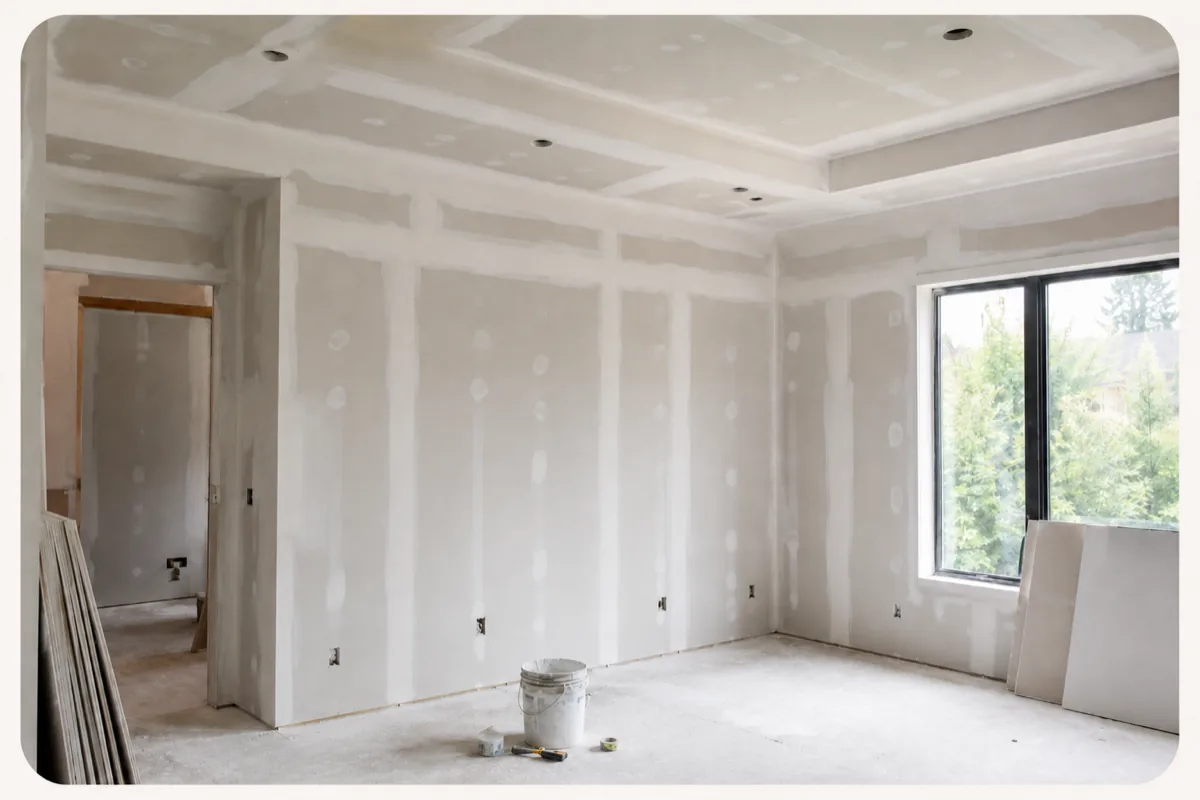

- Gypsum board hanging: walls and ceilings
- Taping, floating and feathering all joints
- Texture matching: smooth, orange peel, knockdown
- Patch and repair of existing drywall damage
- Corner bead and metal trim installation
- Surfaces delivered paint-ready, no callbacks
- Holes, cracks or water-damaged sections needing seamless repair
- New room addition or remodel needing walls and ceilings closed
- Texture mismatch after a repair that shows through paint
- Built-in shelves or openings needing clean drywall finishing
Four steps from the first visit to the finished work.
- 01
Consult
We visit your property, listen to how you want to use the space and take measurements.
- 02
Design
You get a clear plan and a written quote covering materials, layout, drainage, timing and price.
- 03
Build
Our in-house crew prepares the site, installs hardscape and softscape, and cleans up daily.
- 04
Maintain
If you want, we come back each season for aeration, fresh mulch and irrigation tuning to keep it looking new.
Drywall pricing by the sheet, the room and the repair
Hanging and finishing new drywall generally runs $2.00 to $3.50 per square foot of wall and ceiling area, materials included. A standard 12 by 12 bedroom works out to roughly $1,400 to $2,400. Small repairs are priced by the job, not the square foot: a doorknob hole is usually a minimum call-out, and a water-damaged ceiling section runs $300 to $900 once the source has been fixed.
The single biggest driver of price is the finish level you need, and it is the part most quotes leave unstated. That is why we put it in writing before starting.
- Level 3. Fine under heavy texture. Not acceptable under flat or eggshell paint, where every joint will show.
- Level 4. The residential standard. Right for most walls under matte and eggshell finishes.
- Level 5. A skim coat over the whole surface. What you need under gloss paint, on a ceiling that gets raking light from a window, or on any large uninterrupted wall. Costs more and is the only thing that hides joints under those conditions.
Which board goes where, and where the wrong one causes trouble
Standard half-inch board covers most walls. Ceilings should get five-eighths or half-inch sag-resistant board. Standard half-inch on ceilings framed 24 inches on centre will sag between the joists over time, and it is a visible wave you cannot fix with paint.
Bathrooms and laundry rooms want moisture-resistant board, and a tiled shower surround wants cement board rather than any paper-faced product. Putting regular drywall behind tile in a wet area is one of the most common shortcuts we get called to tear out, usually a few years later and usually with mould behind it. Garages and walls between a garage and living space have fire-rating requirements, which means five-eighths type X board and properly finished joints.
For anyone in this market: our humidity is high enough for long enough that the moisture-resistant choice is worth making in more rooms than the code strictly requires.
Three coats, sanded properly, and the light that finds everything
Finishing is three separate coats with drying time between them, not one thick pass. Tape coat embeds the tape, second coat widens and fills, third feathers the edges out wide enough that the transition disappears. Rushing the drying is what produces cracked joints and shrunken seams a month after the painters leave.
Sanding decides how the finished wall looks. We sand to a raking light: a work light held nearly flat against the wall, which throws a shadow off any ridge or dip the naked eye misses under overhead lighting. If a wall is not checked that way, the first sunny afternoon through a window will find every flaw for you.
Dust control matters in an occupied house. We seal openings, run containment and vacuum-sand where practical, and prime before we call it finished, because unprimed compound and unprimed paper absorb paint at different rates and the joints show through the first coat.
Cracks, water stains and nail pops, what each one is telling you
A hairline crack running diagonally from a door or window corner is usually normal settlement and a straightforward patch. A crack that keeps returning in the same place after a proper repair points to a structural or moisture problem rather than a drywall one, and refilling it every year only treats the symptom.
A brown or yellow stain on a ceiling means water, and the leak has to be found and fixed before any board goes back. Patching over an active leak hides it and costs far more later. Nail pops are the fasteners backing out as framing dries and shrinks, common in newer houses; the fix is to reset or replace the fastener and refinish, not to smear compound over the bump.
Need walls or ceilings finished right? Let's take a look.
We'll walk the property, ask how you want to use it, and follow up with a written quote that lays out scope, materials and price. We won't push extras you didn't ask for.
Get Your Free Drywall & Finishing Estimate
Tell us about your project and a local LAP Landscaping crew member replies quickly with a clear plan and an honest price, with no pressure and no obligation.
Form not loading? Call 704-327-5663.
Explore more services