
Mulch, Aeration & Pruning Services
Seasonal upkeep keeps a yard looking good for years instead of for one season. We handle mulch, aeration, overseeding and tree-and-shrub pruning on schedules tuned to each growing season.
Request a free estimate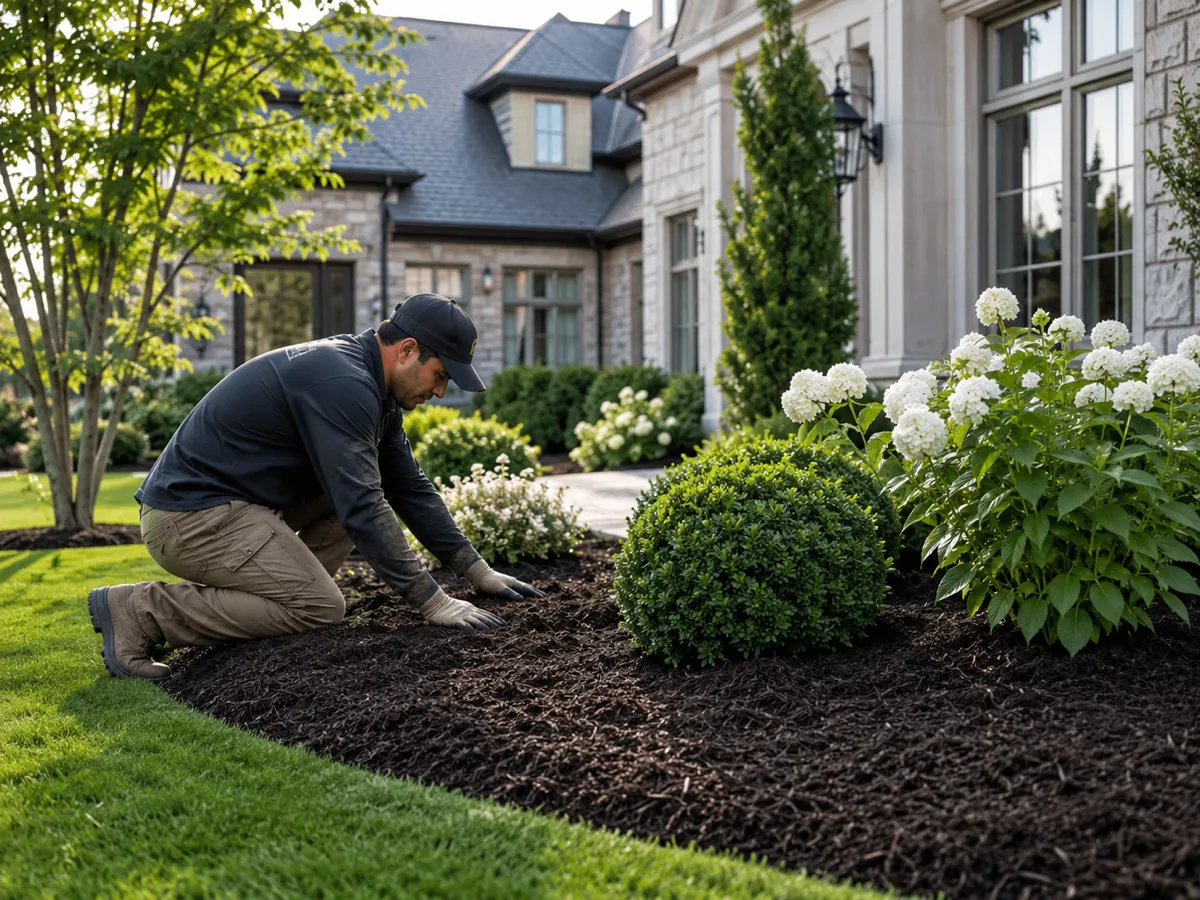
- Mulch installation & bed edging
- Core lawn aeration
- Overseeding for thicker, healthier turf
- Tree & shrub pruning and shaping
- Bed refresh & weeding
- Top soil & fertilization recommendations
- Compacted soil that won't grow grass
- Faded mulch and overgrown beds
- Overgrown shrubs blocking windows or paths
- Yard that looks fine in spring and rough by August
Four steps from the first visit to the finished work.
- 01
Consult
We visit your property, listen to how you want to use the space and take measurements.
- 02
Design
You get a clear plan and a written quote covering materials, layout, drainage, timing and price.
- 03
Build
Our in-house crew prepares the site, installs hardscape and softscape, and cleans up daily.
- 04
Maintain
If you want, we come back each season for aeration, fresh mulch and irrigation tuning to keep it looking new.
Mulch, aeration and pruning: what each one runs
Mulch is sold and installed by the cubic yard. One yard covers about 100 square feet at three inches deep, and installed with edging and cleanup runs roughly $75 to $120 per yard depending on material and how far it has to be carried. A typical suburban front-and-side bed layout takes four to eight yards.
Core aeration on a quarter-acre lot generally runs $150 to $300, and overseeding on top of it adds $200 to $450 depending on seed. Pruning is quoted by the job rather than the hour, because the honest variable is how long the shrubs have been left, not how many there are.
- Hardwood mulch. The workhorse. Breaks down into the soil and feeds it, needs topping up annually. Best value for most beds.
- Pine bark and pine straw. Lighter, acidic as it breaks down, and the traditional look here. Pine straw is cheap and fast on slopes where bark would wash.
- Dyed mulch. Holds colour a full season. Purely cosmetic and it adds nothing to the soil, which is a fine trade if colour is what you want.
Three inches, and never against the trunk
Aim for three inches. Less than two does not suppress weeds or hold moisture; more than four starts shedding water instead of absorbing it and can suffocate shallow roots. Beds that get topped up every spring without anyone removing the old layer end up six or eight inches deep, which is a slow way to kill the plants it was meant to protect.
The most common and most damaging mistake is the mulch volcano: mulch piled in a cone against a tree trunk. Bark is not root; kept wet and buried it rots, insects move in, and the tree girdles itself with roots that circle in the mulch instead of going into the soil. Pull mulch back two to three inches from every trunk and stem. A tree killed this way takes years to die, so nobody connects the cause to the effect.
Before mulching we edge the beds, pull existing weeds rather than burying them, and break up any crusted old layer so water can pass through it.
Why compacted clay needs cores pulled, not spikes pushed
Our clay compacts under foot traffic, mowers and its own weight, and compacted soil leaves grass roots with nowhere to go and no air to breathe. Core aeration pulls thousands of plugs of soil out of the lawn, which relieves pressure and opens channels for water, air and seed. Spike aerators, the kind sold as shoe attachments, push soil sideways and make compaction worse.
Leave the cores on the lawn. They look untidy for a week or two and then break down and return to the soil with the thatch they carry. Raking them up throws away half the benefit.
For fescue, aerate and overseed in September or October, while the soil is still warm and weed pressure is falling, so the new grass gets three cool seasons to establish before summer. For bermuda, aerate in late spring when it is growing hard. Aerating a dormant lawn does nothing but leave holes.
When to cut, and the mistake that costs you a season of blooms
Timing depends on when the plant sets its flower buds. Shrubs that bloom in spring (azalea, forsythia, most hydrangea varieties grown here) set their buds the previous summer, so cutting them back in winter removes the flowers before they open. Prune those right after they finish blooming. Summer-blooming shrubs and crape myrtle set buds on new growth and are pruned in late winter while dormant.
Crape myrtle deserves its own sentence, because the routine topping done all over this area is not pruning. Cutting the trunks back to stubs each winter produces weak, whippy growth from the wound, a weaker structure every year, and a tree that never develops the bark and shape it is grown for. Thinning and removing suckers and crossing limbs achieves the goal without the damage.
Dead, damaged and crossing wood can come out at any time of year.
Set up seasonal care that keeps your yard looking sharp.
We'll walk the property, ask how you want to use it, and follow up with a written quote that lays out scope, materials and price. We won't push extras you didn't ask for.
Get Your Free Mulch, Aeration & Pruning Estimate
Tell us about your project and a local LAP Landscaping crew member replies quickly with a clear plan and an honest price, with no pressure and no obligation.
Form not loading? Call 704-327-5663.
Explore more services