Artificial Turf Installation
LAP installs artificial turf and synthetic grass across the Lake Norman and Charlotte area: front and back lawns, pet and dog areas, backyard putting greens, playgrounds, sports and training areas, and rooftop, deck and patio turf. Whether it still looks flat and drains in year ten depends on the base underneath it, and building bases that drain Piedmont red clay is what this crew already does every week. Bilingual service in Troutman, Mooresville, Statesville, Cornelius, Huntersville, Davidson, Charlotte and Denver.
Request a free estimate Or call 704-327-5663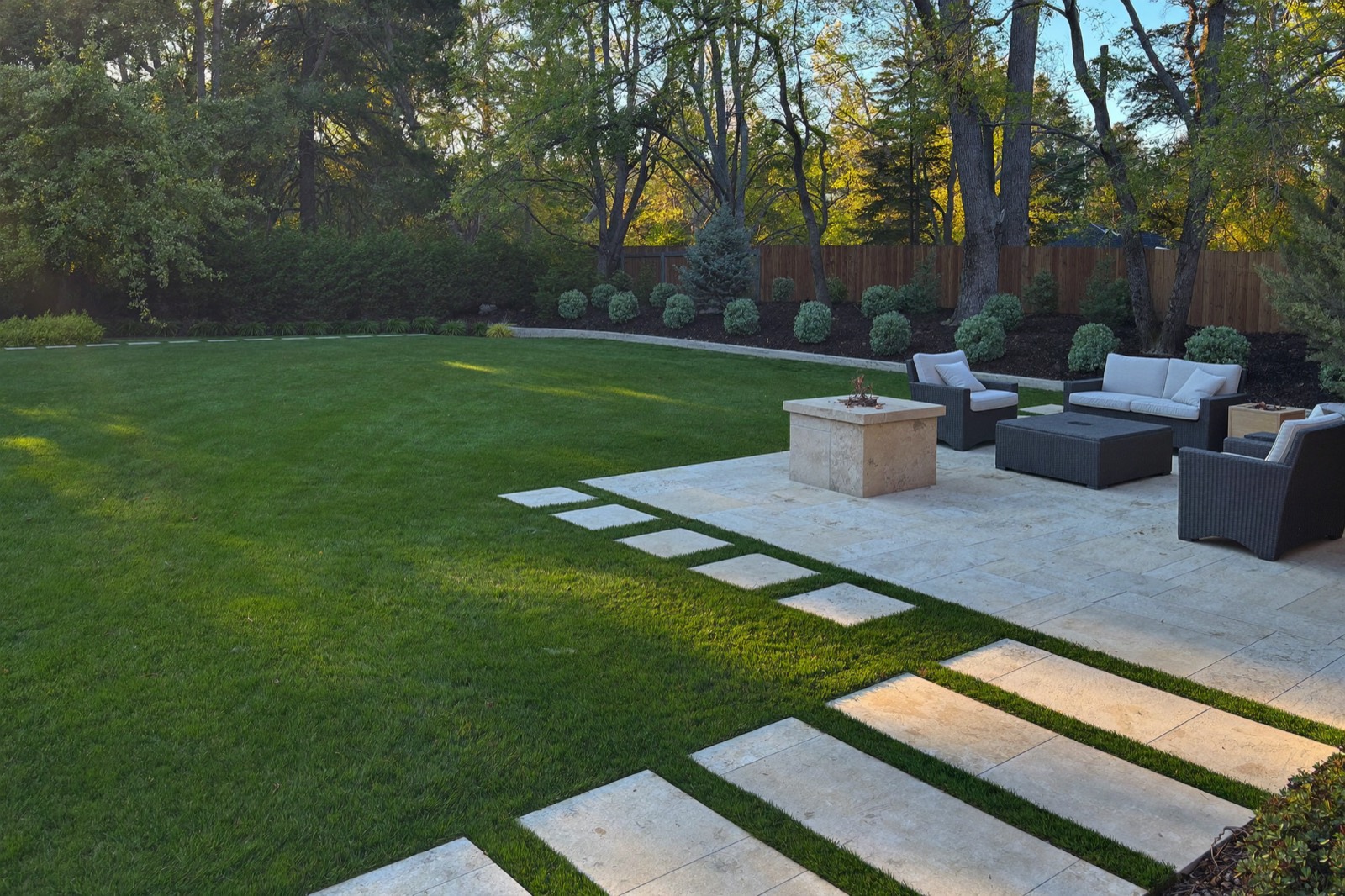
What artificial turf installation actually means
Artificial turf installation is roughly eighty percent excavation and base work and twenty percent turf. We strip the existing lawn, dig down three to four inches, separate the red clay with a geotextile fabric, build and compact a crushed-stone base that is graded to fall toward an outlet, then roll, seam, edge-nail and infill the turf on top of it. Done that way it stays flat, drains in a thunderstorm and lasts fifteen to twenty years.
Almost every turf failure we get called out to look at in Iredell and Mecklenburg County is a base failure rather than a turf failure: ripples from a base that was never compacted, standing water where the clay was left to do the draining, curled edges with no restraint, or a seam laid straight down the middle of the view from the kitchen window. The product on top was usually fine.
- Site walk & measureWe measure the area, check sun exposure, grade, access and where water goes today, and talk through how the space gets used: kids, dogs, golf, entertaining.
- Demolition & excavationExisting sod, roots and topsoil come out to a depth of three to four inches, and the spoil is hauled off instead of spread around the yard.
- Drainage & sub-gradeThe clay sub-grade is shaped to fall toward an outlet. Where the yard has nowhere to send water, we add a French drain, a channel drain or a run to daylight before any stone goes down.
- Geotextile separationA woven geotextile fabric goes over the clay so it cannot pump up into the stone. Skip this layer and the base silts up and stops draining within a few seasons.
- Aggregate base, compacted & laser-gradedCrushed stone is placed in lifts, wet, and compacted with a plate compactor, then screeded flat and true. This layer is what you actually walk on for the next twenty years.
- Lay, seam & secureTurf is rolled out to relax, cut to the edges, and seamed with the grain running the same direction. Seams are planned away from sightlines, then the perimeter is nailed and edged.
- Infill, power broom & hand-offInfill is spread and brushed down into the fibers to stand the blades up, ballast the turf and protect the backing. We clean up, walk you through the care, and leave the yard usable that day.
Turf for Every Part of the Property
These are not the same product with different marketing names. A dog run, a putting green and a playground need different fiber, different backing and different infill, and installing the wrong one is why so many turf lawns disappoint. Here is what each area actually calls for.
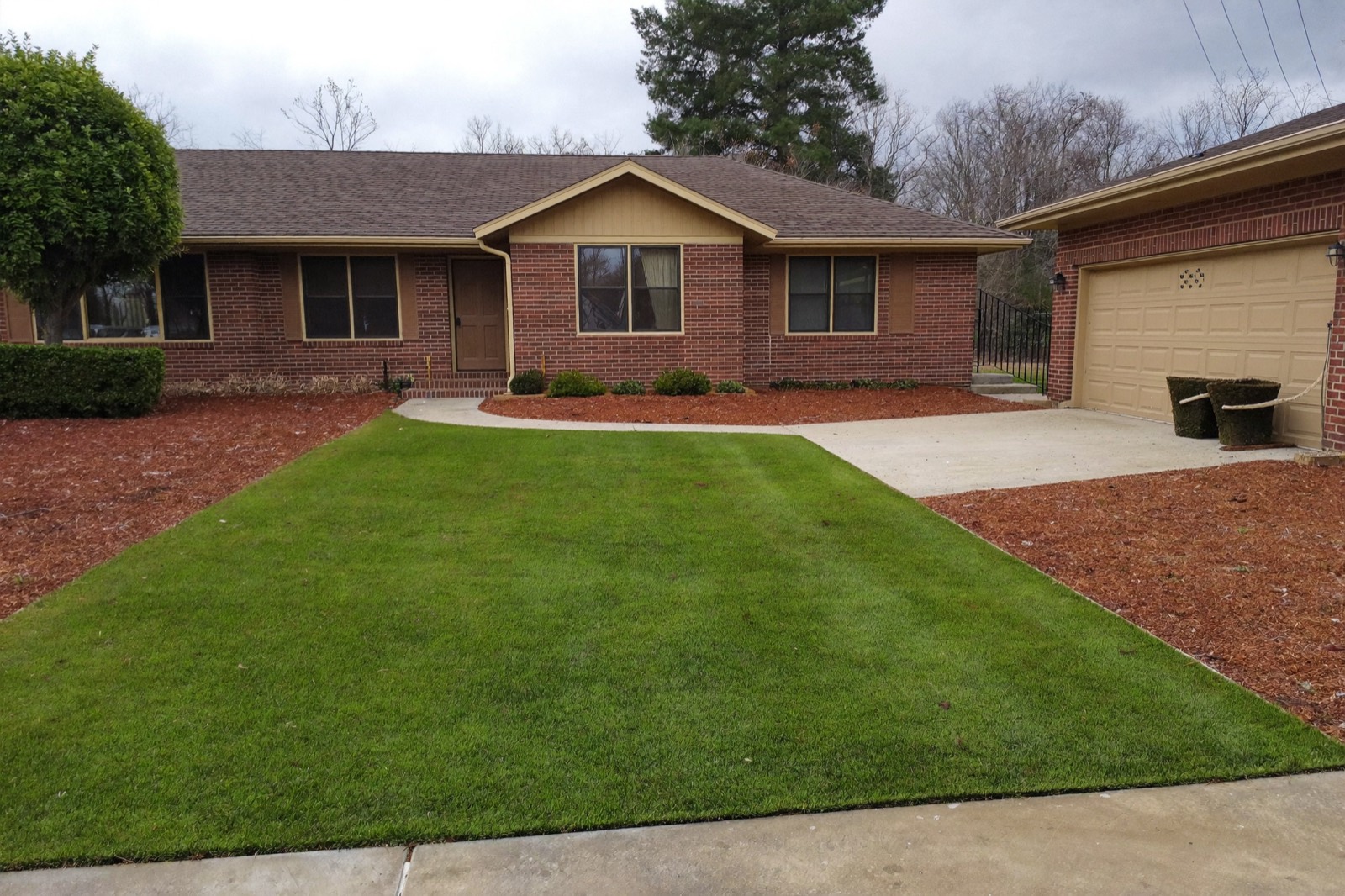
Residential Lawns
A front or back lawn that is green in August drought and in February dormancy, with no mowing, no watering to keep it alive and no reseeding fescue every fall. We use a taller multi-tone fiber with a tan thatch layer so it reads as grass, not carpet.
1.5 to 1.75" pile · 70 to 90 oz · silica sand infill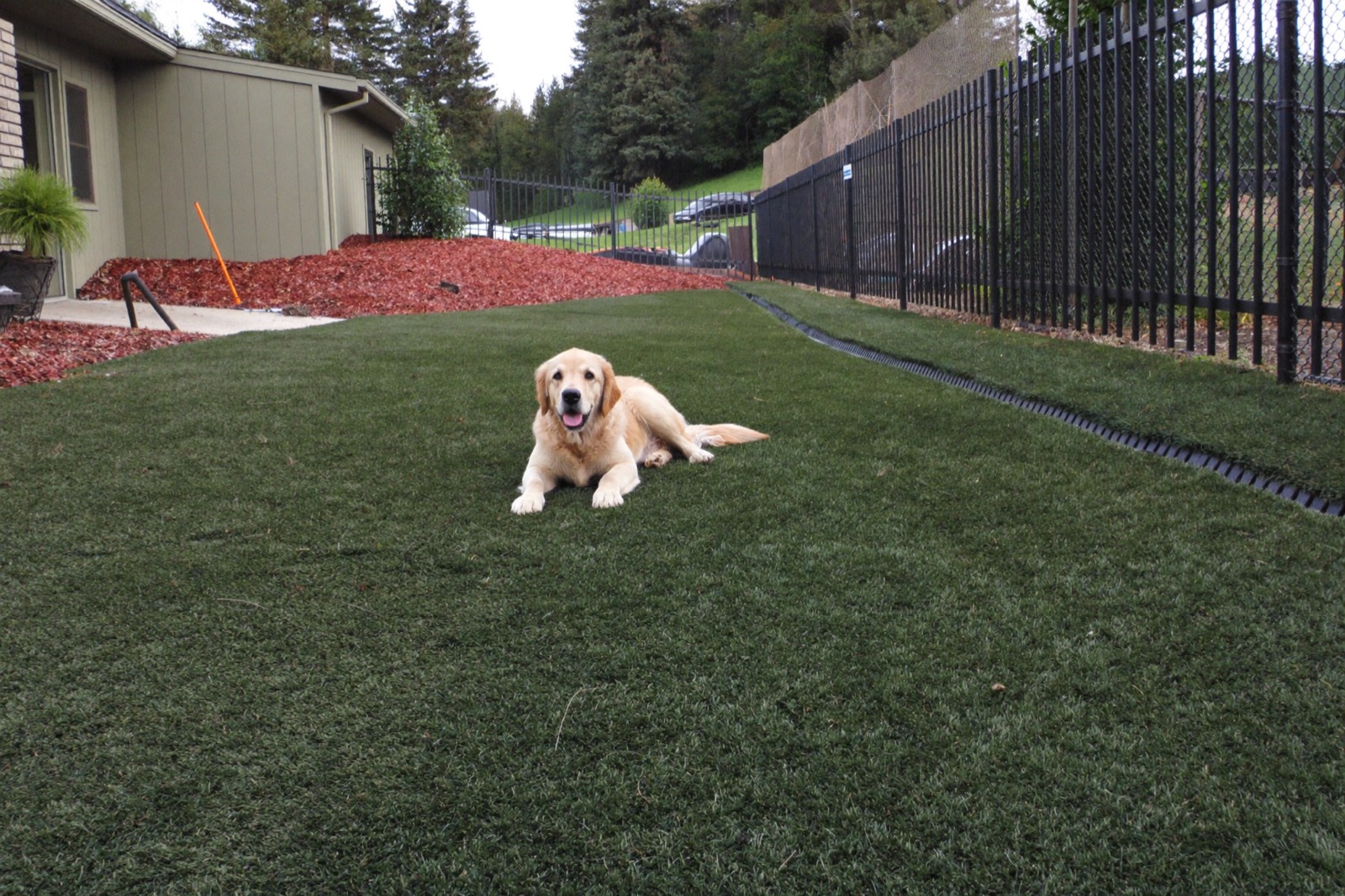
Pet & Dog Turf
No more mud at the back door and no more bare patches where the dog runs the fence line. Pet turf is shorter and denser so it does not mat, with a fully permeable backing and zeolite infill that captures the ammonia in urine instead of letting it sit.
1.0 to 1.25" pile · 100% permeable backing · zeolite antimicrobial infill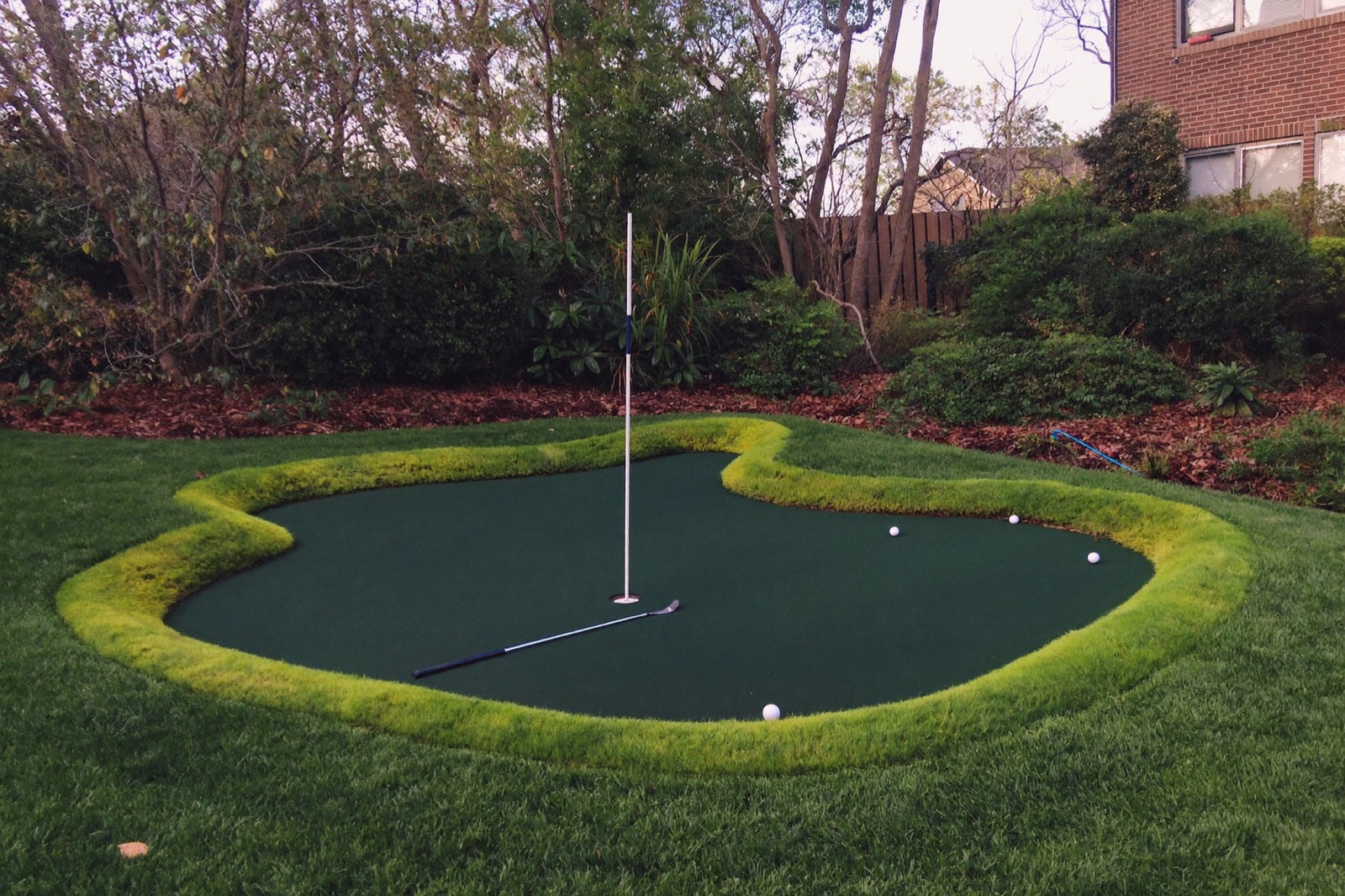
Backyard Putting Greens
A real practice green rather than a mat: a nylon putting surface over a shaped and compacted base, with cups, contour, a fringe collar and a chipping approach if there is room. The base shaping is what gives you a true roll instead of a bumpy one.
0.5 to 0.75" nylon pile · sand-filled · contoured sub-base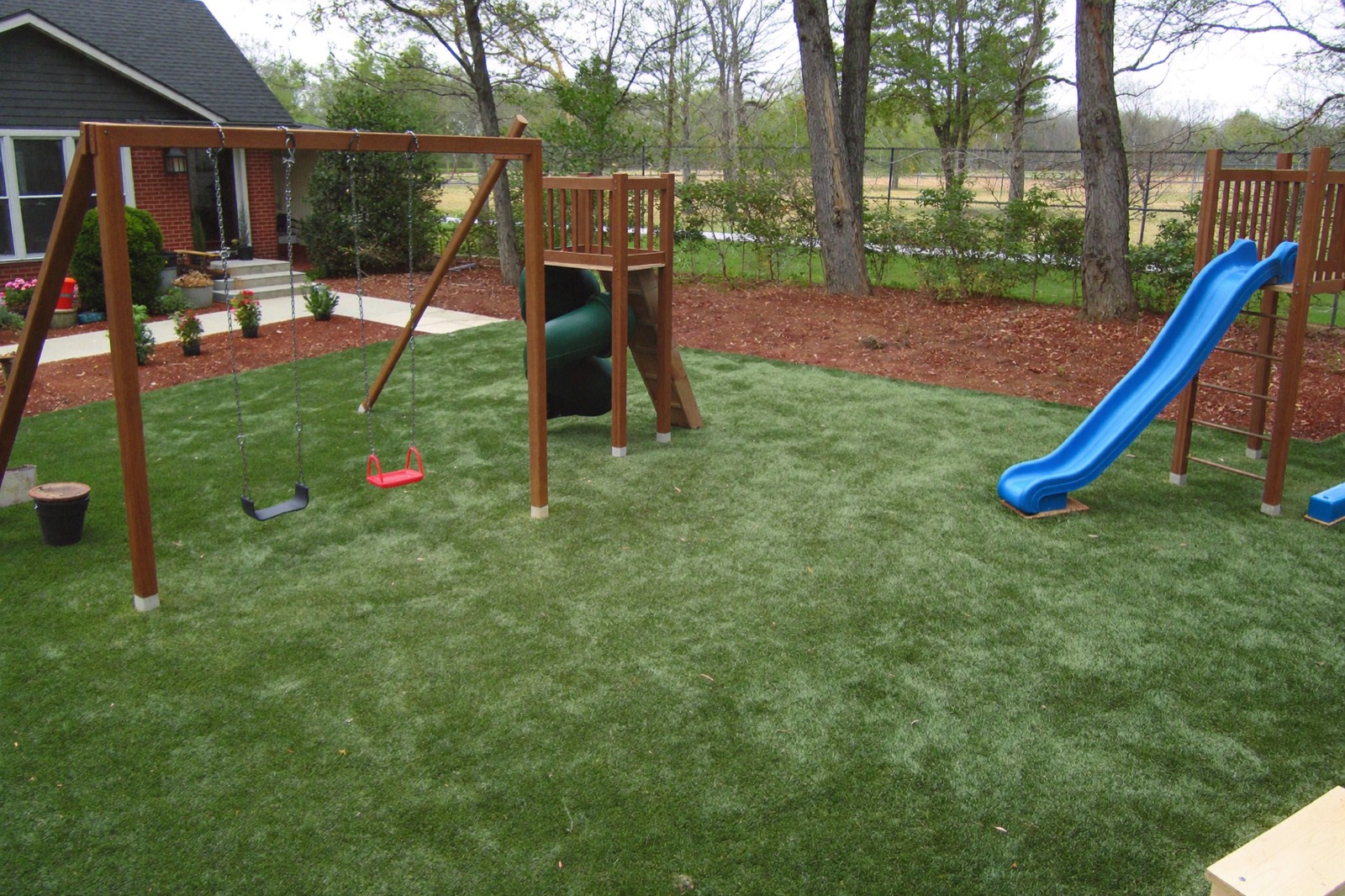
Playground Turf
Turf over a closed-cell foam pad in the fall zone under a swing set or play structure, so a fall lands on padding instead of packed clay. Softer underfoot than mulch, and it does not wash out, blow away or hide splinters and insects.
1.25 to 1.5" pile · 1 to 2" foam safety pad · rated fall height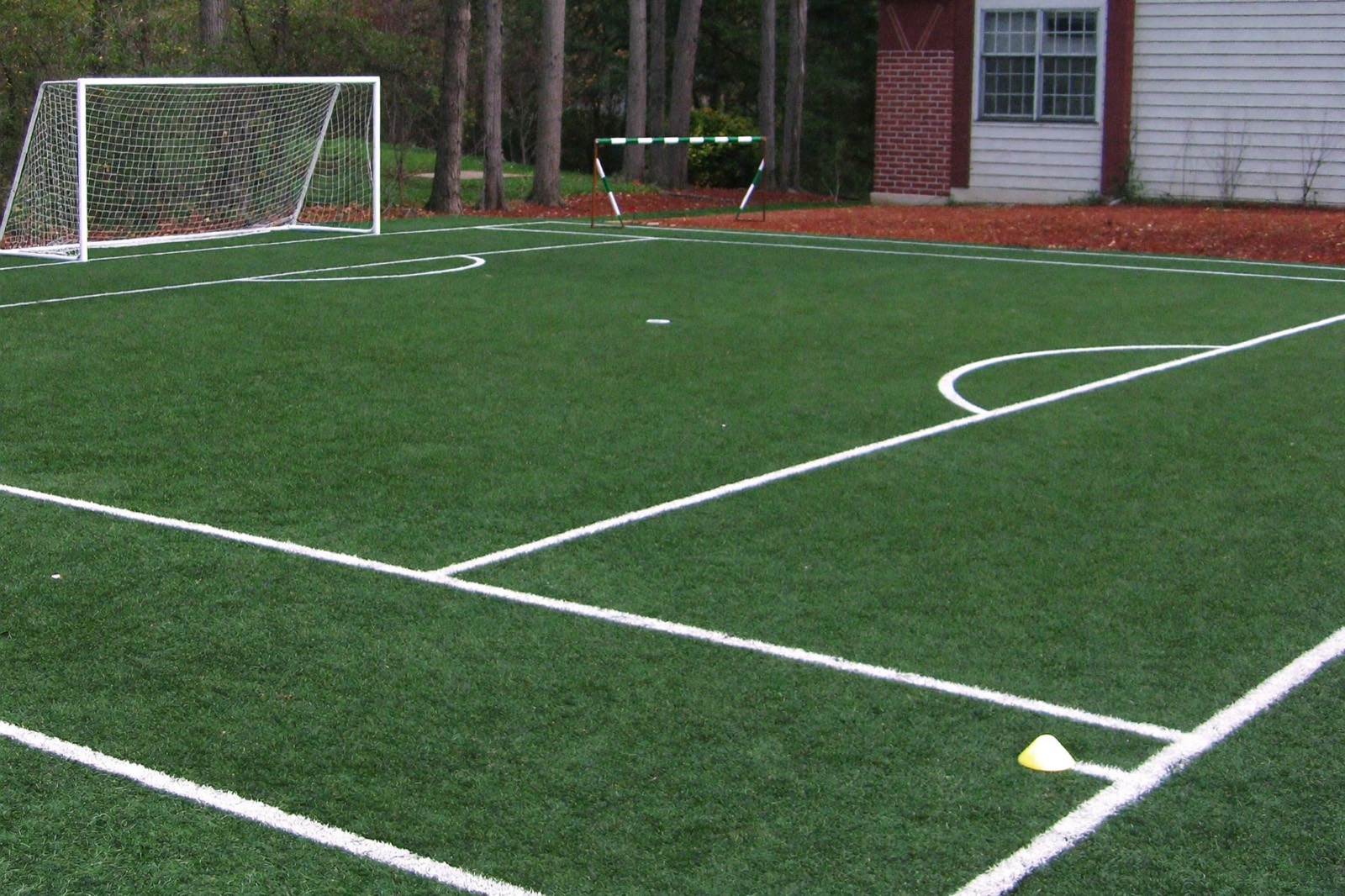
Sports & Training Turf
Backyard training areas, batting and pitching lanes, soccer and lacrosse space, gym and garage flooring. Heavier face weight and a stiffer fiber to take cleats and repetition, with permanent inlaid or painted lines if you want them.
1.5 to 2.0" pile · 80+ oz · sand or coated-rubber infill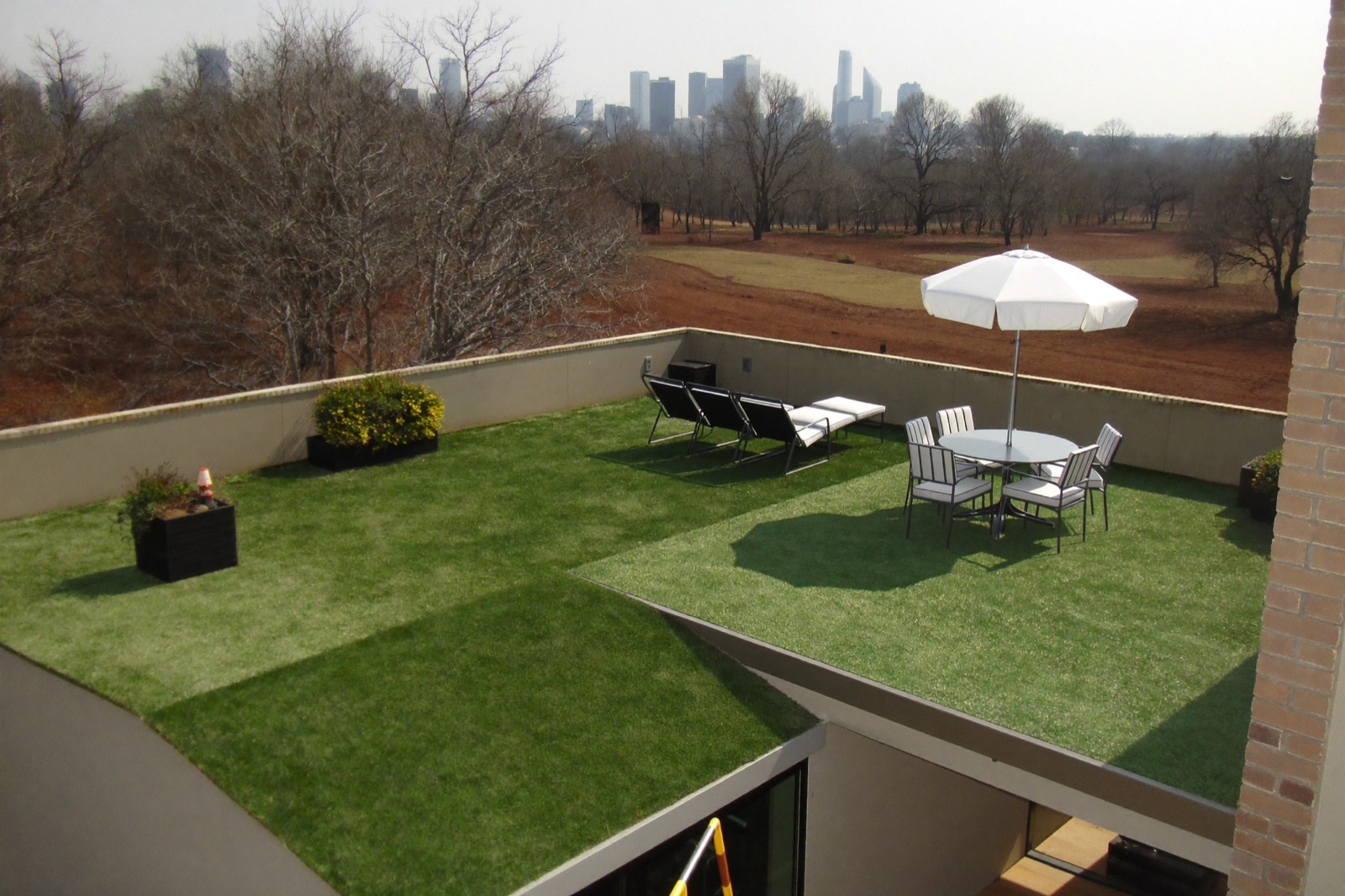
Commercial, Rooftop & Patio
Offices, medical and retail frontage, apartment courtyards, restaurant patios, balconies and rooftop decks. Over a structure the turf goes down on a drainage mat rather than stone, so the membrane is never penetrated and water still gets to the drains.
1.0 to 1.5" pile · UV-stabilized · drainage mat over membrane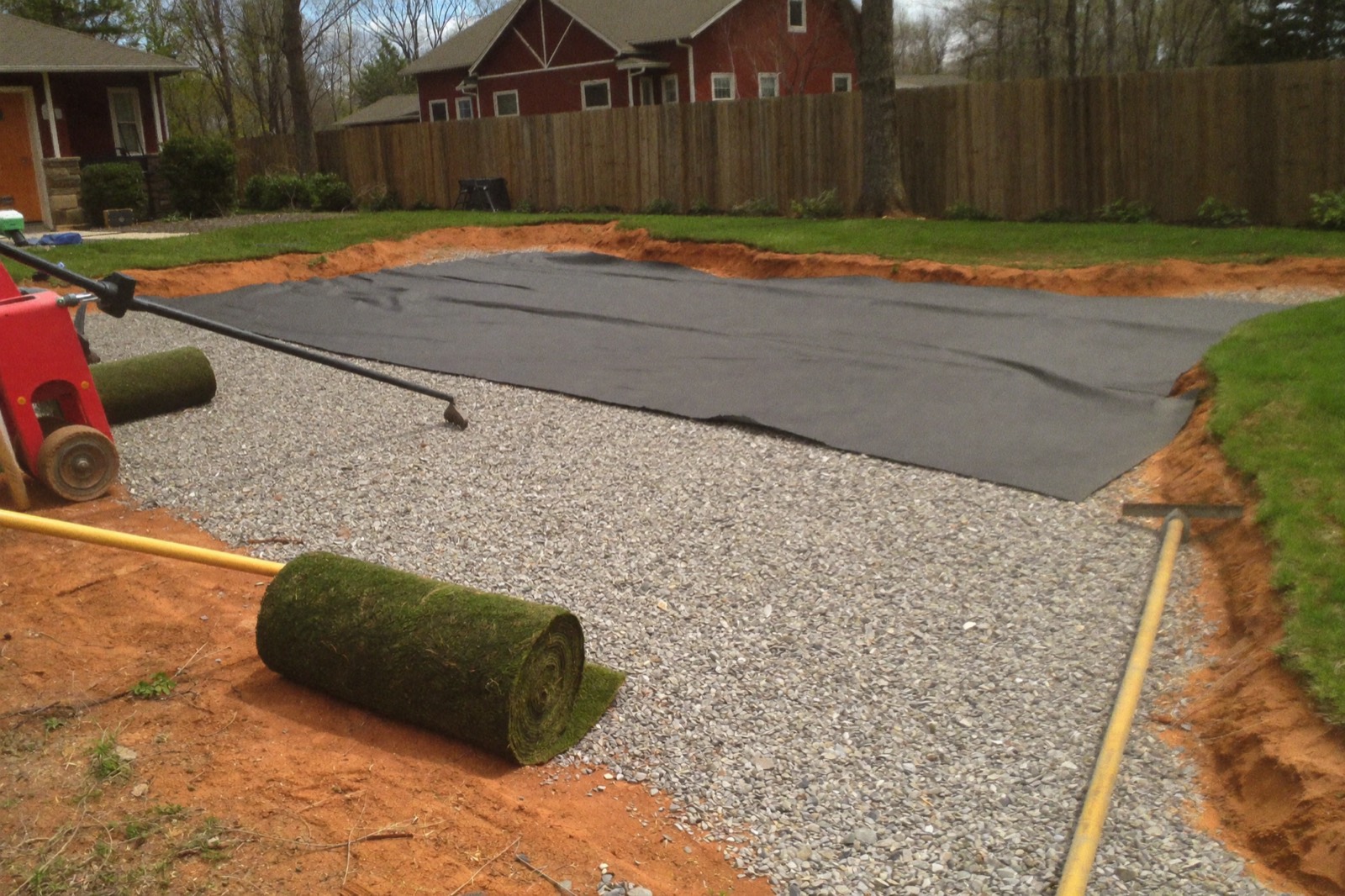
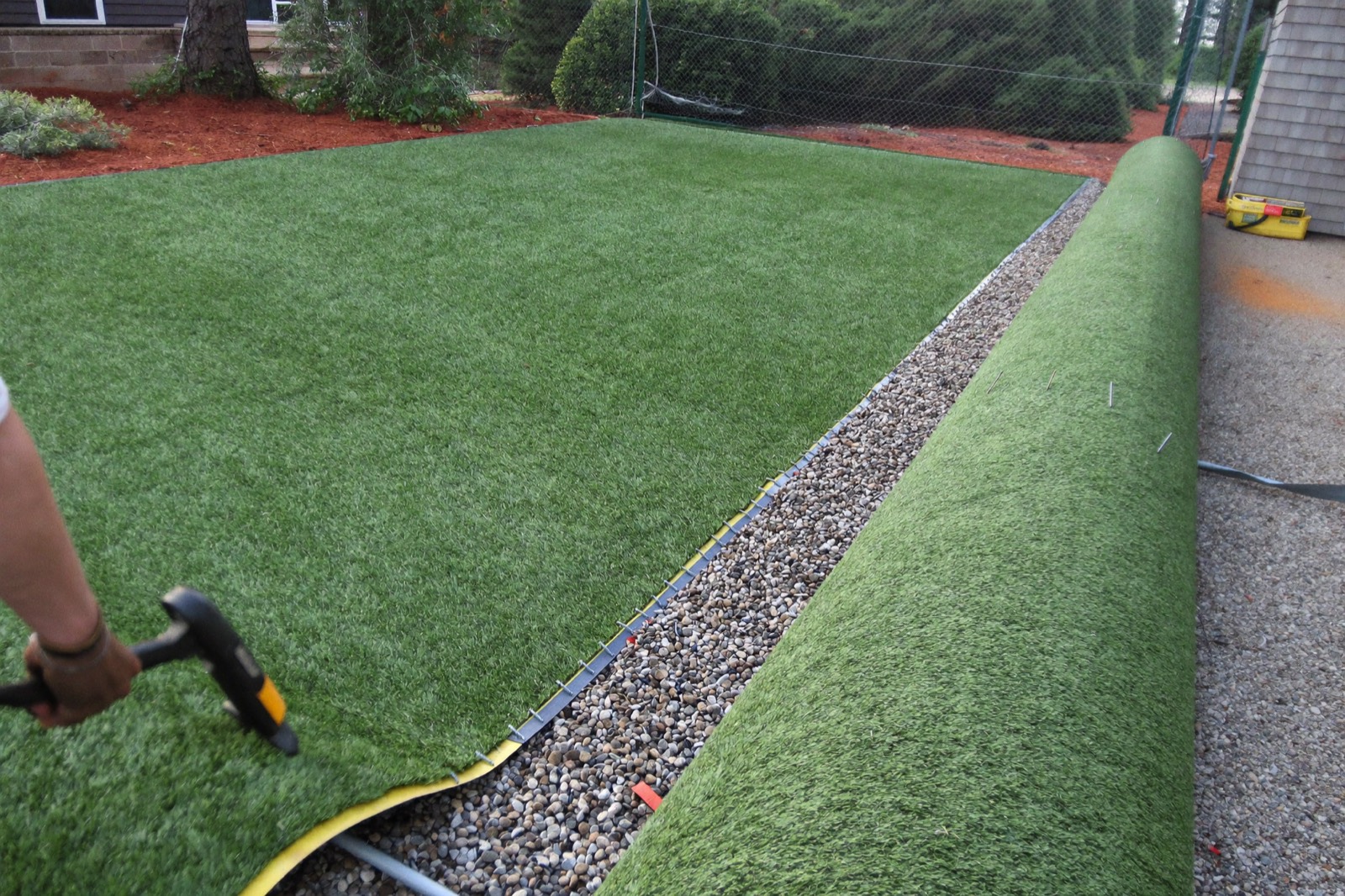
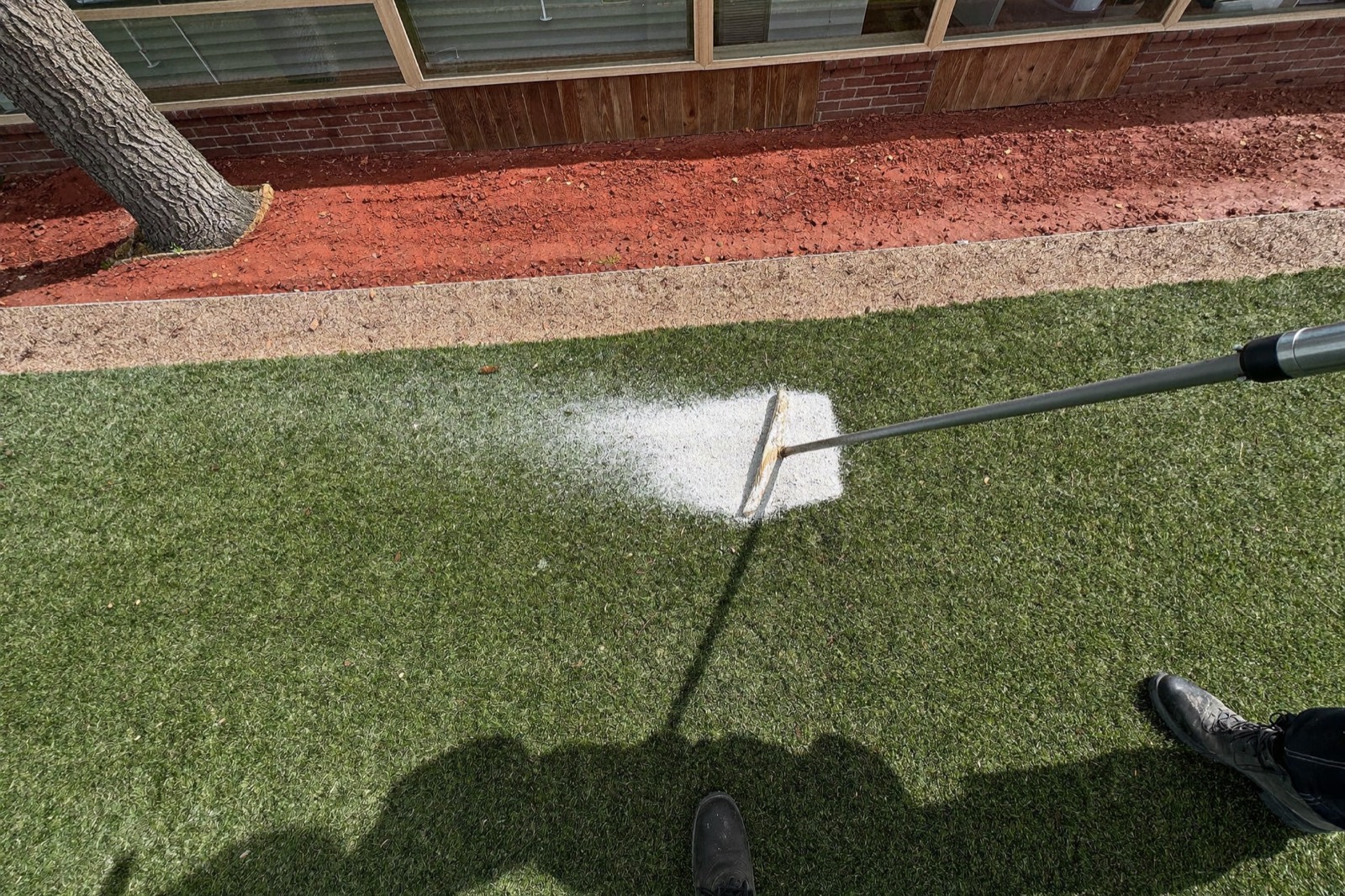
The four stages that decide the result: geotextile and compacted stone base over red clay, edge-nailing and seaming, infill brushed down into the fibers, and the finished lawn. Ask any installer for photos of the middle two. Most only show the last one.
The Four Numbers That Decide Which Turf You Get
Most turf quotes say “premium synthetic grass” and stop there, which tells you nothing and makes two bids impossible to compare. Four specifications decide how a turf looks, feels, drains and wears: pile height, face weight, backing and drainage rate, and infill. Ask every installer you talk to for these four numbers. Ours are written into the quote.
| Application | Pile height | Face weight | Backing & drainage | Infill |
|---|---|---|---|---|
| Residential lawn | 1.5 to 1.75 in | 70 to 90 oz/yd² | Perforated, ~30 in/hr | Silica sand |
| Pet & dog areas | 1.0 to 1.25 in | 60 to 80 oz/yd² | Fully permeable, 100+ in/hr | Zeolite, antimicrobial |
| Putting greens | 0.5 to 0.75 in | 40 to 60 oz/yd², nylon | Perforated over shaped base | Rounded silica, heavy |
| Playground | 1.25 to 1.5 in | 60 to 80 oz/yd² | Permeable over 1 to 2 in foam pad | Silica sand, light |
| Sports & training | 1.5 to 2.0 in | 80+ oz/yd² | Perforated, high tuft bind | Sand or coated rubber |
| Rooftop, deck & patio | 1.0 to 1.5 in | 55 to 75 oz/yd² | Permeable over drainage mat | Light sand or none |
Why Turf Fails in the Piedmont, and How We Build It So It Doesn’t
North Carolina red clay is the whole problem. It holds water instead of passing it, it swells and shrinks with the season, and it pumps fines up into any stone laid directly on it. Turf companies that install the same way here as they do in Phoenix get a lawn that looks perfect for one summer and holds water by the second.
LAP is a drainage, grading and hardscape crew that also installs turf. The drain, the grade, the base and the border are the same job, quoted once, by the people who will still be in the area if something needs looking at.
- Geotextile between clay and stone on every job, so the base does not silt up
- Base placed in lifts and plate-compacted, not just raked flat
- Sub-grade graded to fall, tied into a French drain, channel drain or daylight
- Edge restraint or a paver, travertine or concrete border so edges cannot curl
- Seams planned away from the main sightline, grain running one direction
- Heat handled honestly: lighter infill, shade and a hose bib within reach
- Existing irrigation heads capped and the zone re-programmed, not left buried
- Written specification: pile height, face weight, backing, infill, warranty
The Base, the Drainage and the Borders, Built by the Same Crew
Turf touches almost every other trade in a yard. A turf-only installer hands you back a drainage problem, a torn-up irrigation zone and a raw edge where the turf meets the patio, and you go hire someone else. Everything below is part of the same LAP quote, scheduled in the right order.
Drainage & grading
French drains, channel drains and the fall that sends storm water off the turf and away from the house. On red clay this decides whether the turf drains at all.
Paver patios & borders
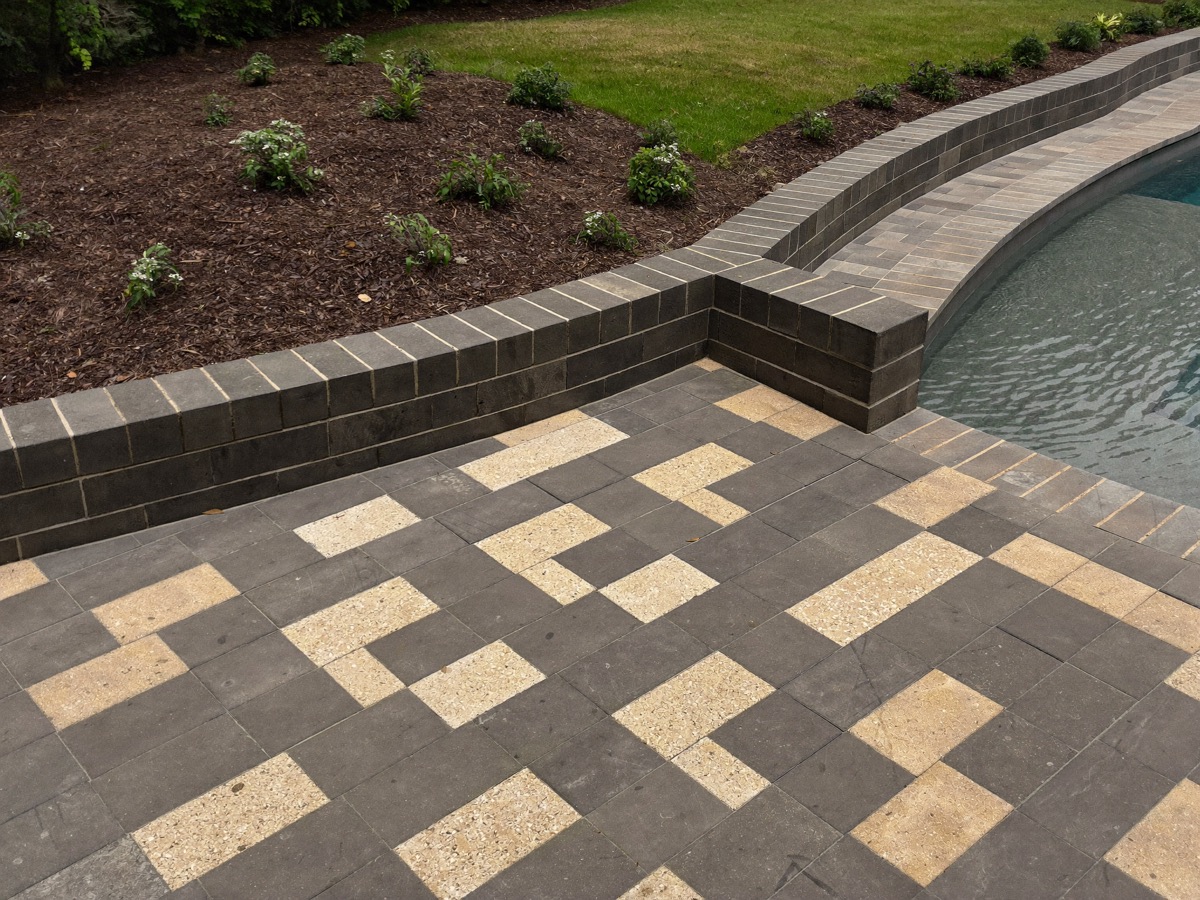
A paver soldier course or a seat wall where the turf meets the patio gives the edge something to be nailed against, so it never curls, lifts or shows a raw cut line.
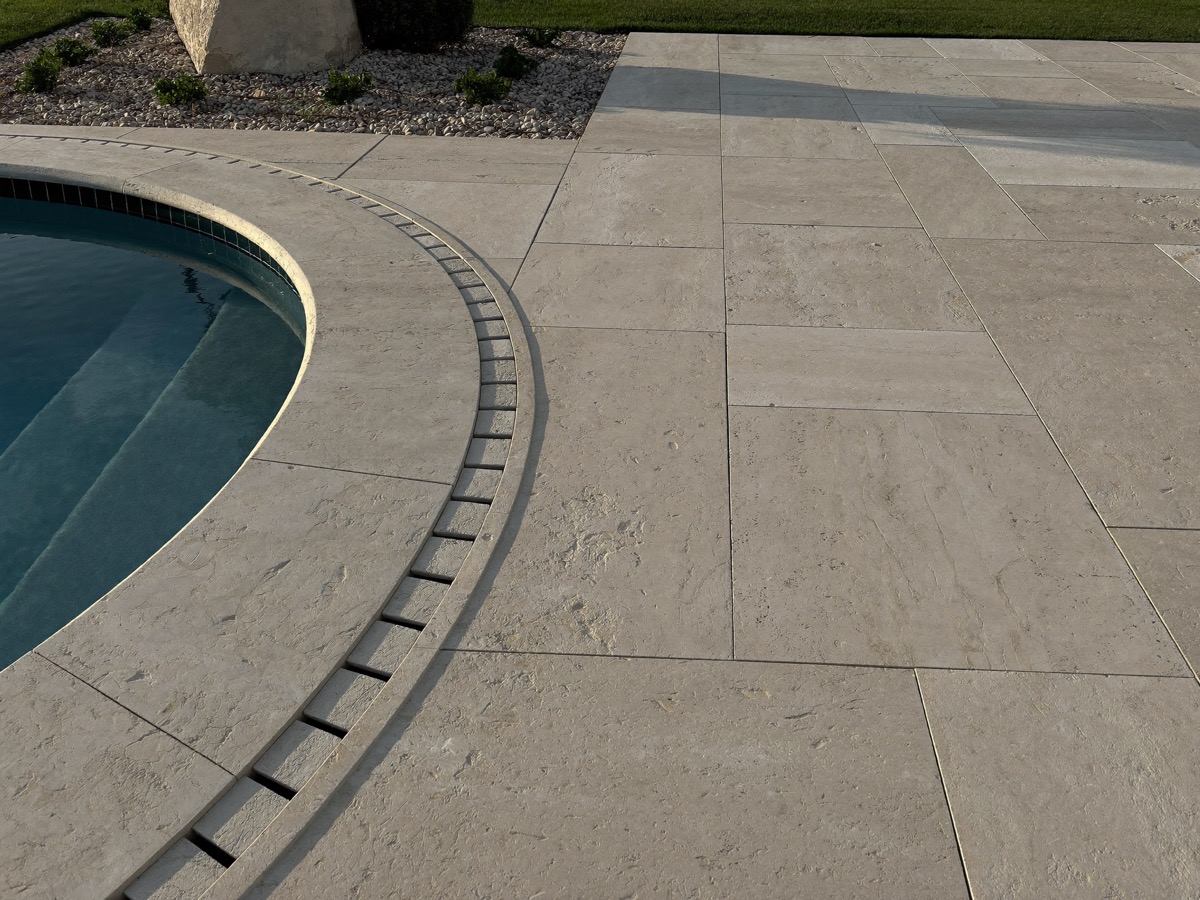
Travertine & stone borders
Travertine stays cool underfoot in August, which makes it the right material for the walking path and pool surround that runs through a turf lawn.
Irrigation rework
Heads under the new turf get capped and the controller reprogrammed, so you are not watering plastic, while the beds and trees that still need water keep their zones.
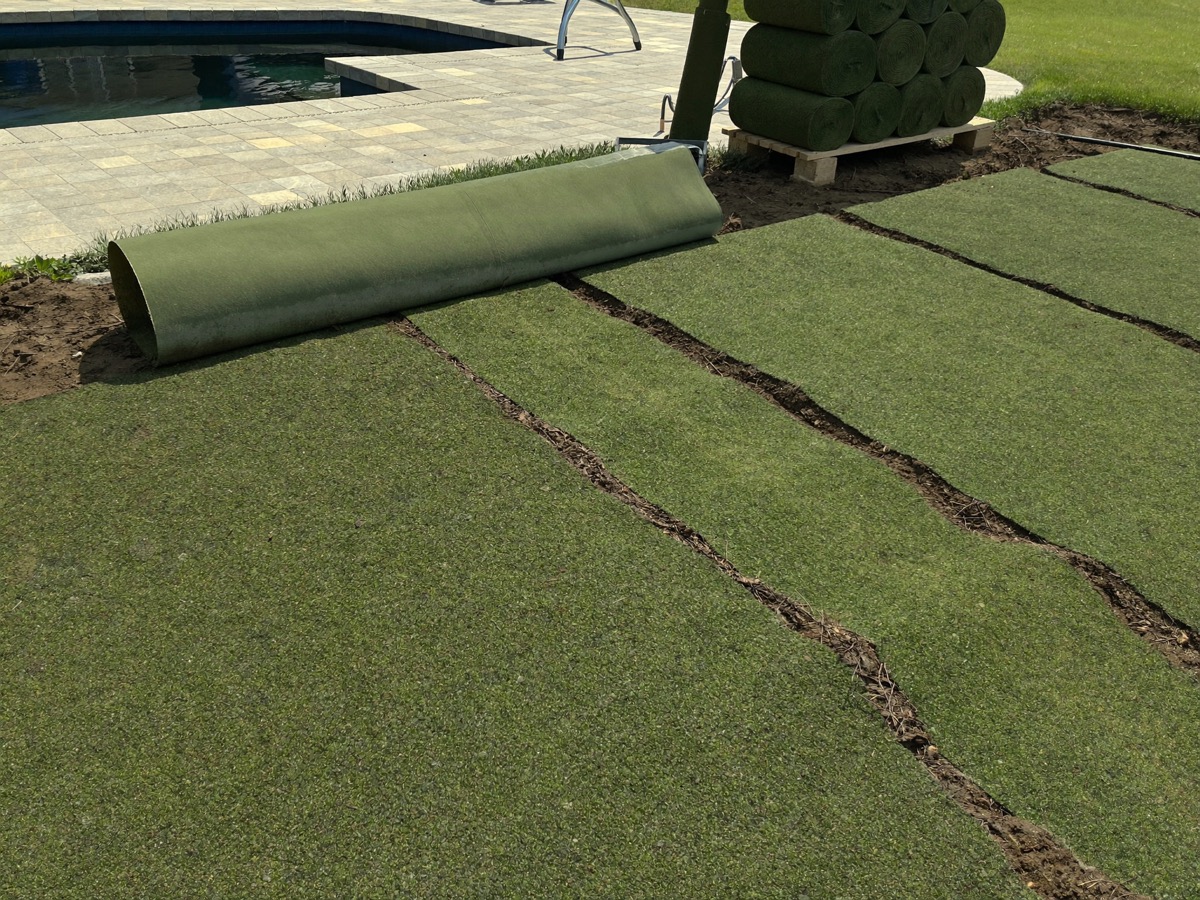
Sod where turf isn’t right
Turf is not the answer for every yard. Large open areas, deep shade and tight budgets are often better in fescue or bermuda, and we will say so. We install both and have no reason to push one.
One crew, one quote, one contact
We schedule drainage before base, base before turf and borders before infill, with one point of contact and a written specification you can hold us to. Bilingual English and Spanish from the first walk-through to the final brush-out.
Request a free estimateArtificial Turf FAQ
Straight answers about turf on Carolina red clay, in English or Spanish: drainage, heat, dogs, HOAs and what drives the price.
Ask Us Anything →Can artificial turf be installed over North Carolina red clay?
Yes, but the clay is exactly why the base matters more here than almost anywhere else. Piedmont red clay barely percolates, so water cannot soak away under the turf the way it does in sandy soil. The base has to be the drainage. We excavate three to four inches, separate the clay with a geotextile fabric so it cannot pump up into the stone, lay and compact a crushed aggregate base, grade it to fall toward a daylight outlet or a perimeter drain, and only then install turf. Turf laid straight onto graded clay is the single most common reason a Carolina turf lawn ripples, holds water and smells within two years.
Does artificial turf get hot in Carolina summers?
In full sun on a July afternoon, synthetic turf runs meaningfully hotter than living grass. That is true of every product on the market. What changes the number is specification and layout: heat-reflective yarn, a lighter-colored sand infill instead of black crumb rubber, keeping the turf out of the hottest west-facing strip where a shade tree or an awning is not an option, and a hose bib within reach, because thirty seconds of water drops the surface temperature immediately. We will tell you if a particular area of your yard is a bad candidate.
How long does artificial turf last?
A quality turf installed on a properly built base typically lasts fifteen to twenty years in our climate, and most manufacturers back the yarn with a warranty in that range against UV fade and fiber loss. Lifespan is decided far more by the base than by the turf: a good turf on a thin or poorly compacted base develops ripples, seam separation and low spots within a few seasons, while a mid-grade turf on a correct base still looks flat and tight a decade later.
Is artificial turf safe for dogs, and how do you handle odor?
Pet areas get a specific build, not the same lawn turf. We use a shorter, denser pet-rated turf with a fully permeable backing rather than punched drain holes, and a zeolite-based antimicrobial infill instead of plain silica sand. Zeolite captures the ammonia in urine, which is the smell people notice when a pet lawn goes bad. Solids are picked up as normal and the area gets rinsed periodically. Odor complaints almost always trace back to one of three things: a backing that cannot drain fast enough, plain sand infill, or a base that holds water against the clay.
How does artificial turf drain in a heavy Carolina thunderstorm?
The turf itself is rarely the bottleneck. A fully permeable backing passes well over 100 inches of water per hour and a perforated backing roughly 30, both far more than any storm we get. The bottleneck is what sits underneath. Water passes the turf in seconds, then has to move sideways through the aggregate base to somewhere it can leave. That is why we grade the base to fall and tie it into a French drain, a channel drain or a daylight outlet on every job where the yard does not already drain on its own.
Will my HOA allow artificial grass?
It depends entirely on your community, and it is worth asking before you plan the project. Some Lake Norman and Charlotte-area HOAs approve synthetic turf without comment, some allow it in back yards only, and a few restrict it in front yards or require an architectural review. We can provide the product specification, a scope description and photos of a comparable install for your ARC submission. Homeowners have found the approval far easier when the request shows a specific product and a real drainage plan rather than just “artificial grass.”
What drives the price of an artificial turf quote?
Five things, in roughly this order. Square footage, because most of the cost is base material and labor per square foot. Site access and demolition: whether a machine can reach the area, what has to come out, and how far the spoil has to be carried. Drainage, meaning whether the yard already sheds water or needs a French drain, channel drain or a run to daylight. The turf itself, since pile height, face weight and backing swing the material cost considerably between a light residential lawn and a heavy pet or sports turf. And edges, which is bender board on a simple lawn or a paver, travertine or concrete border where the turf meets a patio. Your written quote breaks these out line by line.
How much maintenance does artificial turf actually need?
Much less than a lawn, but not zero. Plan on brushing the fibers upright in high-traffic paths a few times a year, blowing or raking leaves and pine straw off it in fall so organic matter does not compost in the fibers, rinsing pet areas, and topping up infill every few years in the places that get walked on most. No mowing, no watering to keep it alive, no fertilizer, no aeration, no reseeding a fescue lawn every fall.
¿Instalan césped artificial y hablan español?
Sí a las dos cosas. Instalamos césped artificial y sintético (jardines, áreas para perros, greens de golf, áreas de juego, canchas y terrazas) y atendemos a cada cliente en inglés o español, por teléfono, en el presupuesto escrito y en la obra. Somos un equipo familiar de Troutman, NC, con licencia y seguro.
Let's build the base your turf will sit on for twenty years.
We'll walk the property, ask how you want to use it, and follow up with a written quote that lays out scope, materials and price. We won't push extras you didn't ask for.
Get Your Free Artificial Turf Estimate
Tell us the area and how you want to use it (lawn, dogs, putting green, playground or patio) and a local LAP Landscaping crew member replies quickly with a written specification and an honest price, with no pressure and no obligation.
Form not loading? Call 704-327-5663.
Explore more services